Peripheral Doppler Ultrasound in Dubai: What to Expect

How we write our guides: see our editorial policy.
What a Peripheral Doppler Ultrasound Maps
A peripheral Doppler ultrasound of the leg, also called a venous Doppler or a varicose vein scan, is a request made by a referring doctor to look at how blood moves through the veins below the skin and deeper inside the leg. RadiologyInfo.org, published by the RSNA and ACR, explains that venous ultrasound uses sound waves and the Doppler effect to show the direction and speed of blood flow, not just the shape of the vein.
The test maps two systems: the superficial veins just under the skin, which are often involved in varicose veins, and the deep veins that run between the muscles. The sonographer checks whether the valves inside each vein are closing properly or letting blood flow backwards, a pattern called reflux, and whether any vein segment is blocked by a clot.
NICE guideline CG168 on varicose veins notes that duplex ultrasound (a Doppler scan that combines flow information with a standard image) is the usual first test when a vascular surgeon or GP is deciding whether reflux is present and in which vein.
Lying Down or Standing: Why Position Matters
Unlike many ultrasound scans, a venous leg study often uses more than one position. Lying down is commonly used for checking the deep veins for a possible clot, which the NHS describes in its page on deep vein thrombosis (DVT) as a serious reason for urgent assessment if a leg is suddenly swollen, painful or red.
Standing, or sometimes sitting with the leg lowered, raises pressure in the superficial veins and makes reflux easier to see, which is why a varicose vein assessment often asks the patient to stand for part of the study. The centre's sonographer decides, case by case, which positions are needed based on the referral.
Tell the centre if standing for several minutes is difficult, for example because of balance problems or pain, so the appointment can be planned around it.
What Happens During the Appointment
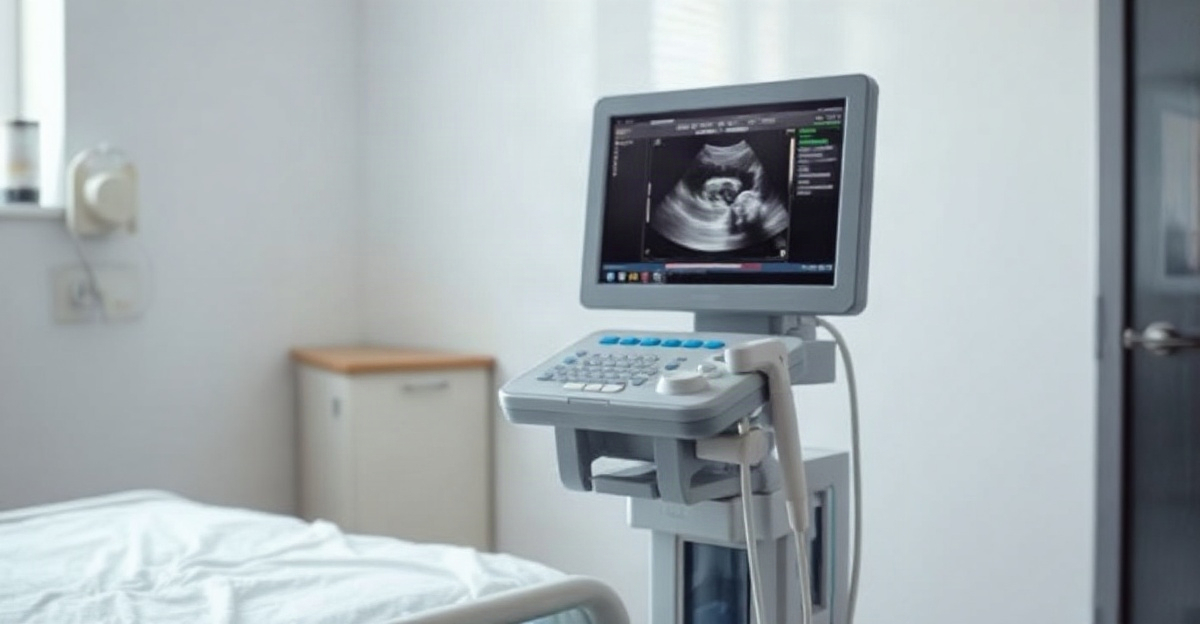
A peripheral venous Doppler is typically carried out with a handheld probe moved along the leg while gel is applied to the skin; it is not an invasive test. Appointments commonly run longer than a standard ultrasound because both legs, or a longer segment of one leg, may need to be checked, and the sonographer may ask the patient to change position partway through.
Wearing loose trousers or a skirt that can be rolled up makes the leg easier to examine. There is no fasting and no special preparation beyond comfortable clothing, though the centre confirms any specific instructions when the appointment is booked.
Doppler reports are typically issued within 24 to 48 hours; timing is set by the centre, and some vascular surgeons ask to see the images as well as the written report before deciding on next steps.
What the Report Tells the Vascular Surgeon
The written report usually describes each major vein examined, its diameter, whether a clot is seen, and if reflux is present, how long it lasts when the vein is tested (reflux timing helps separate normal flow from a leaking valve). For varicose veins, this detail helps the vascular surgeon decide whether compression stockings, injection treatment or a procedure to close the faulty vein is appropriate, as outlined in NICE guideline CG168.
The report does not recommend a treatment itself; it describes what the images show. The referring doctor combines the findings with the patient's symptoms and examination to plan care, and MelioHealth has no part in that clinical decision — it only arranges the appointment through imaging services offered by partner centres.
Booking a Leg Vein Doppler in Dubai or Sharjah
In Dubai, imaging centres are licensed by the Dubai Health Authority (DHA). In Sharjah, partner centres are licensed by the relevant UAE health authority. MelioHealth books appointments with these licensed partner centres; it does not perform the scan, employ the sonographer, or issue the report.
To book, message the MelioHealth team on WhatsApp with the test name (peripheral or venous Doppler), the emirate, and preferred days; bring the referral letter and any earlier scan reports to the appointment itself rather than sending them beforehand. The full range of options, including the Doppler ultrasound page, sets out what the test covers for arteries as well as veins.
Ask the insurer whether the health plan needs prior approval for a venous Doppler; the centre tells the patient what documentation it needs at the time of booking. No AED price is confirmed for a Doppler study; the exact price is confirmed on WhatsApp before booking. Whether a partner centre accepts walk-ins is not confirmed, so it is worth booking a slot or asking the centre directly before travelling.
Frequently Asked Questions
Does a leg vein Doppler hurt?
Usually not, although pressure from the probe can feel uncomfortable over a tender area. It uses a handheld probe and gel on the skin, similar to other ultrasound scans, and does not involve needles or ionising radiation.
Do I need to fast before a venous Doppler?
No fasting is usually needed for a leg vein Doppler; the centre confirms any preparation when the appointment is booked.
How is a Doppler different from a regular leg ultrasound?
A standard ultrasound shows the shape of tissues, while a Doppler study adds information about the direction and speed of blood flow in the veins or arteries.
Can a Doppler scan rule out a blood clot (DVT)?
A venous Doppler is a common first test for suspected DVT, but the NHS advises seeking urgent medical attention for sudden leg swelling, pain or redness rather than waiting to arrange a scan.
Will I need to stand during the scan?
Possibly. Standing raises pressure in the superficial veins and can make reflux easier to see, so the sonographer may ask for part of the study to be done standing.
Sources
Venous Ultrasound (RadiologyInfo.org (RSNA and ACR))
About this guide
This article is general information for patients in the UAE, not medical advice. MelioHealth is a booking and referral service; it does not provide medical advice, diagnosis, or treatment. Always follow the guidance of your referring doctor and the imaging centre, laboratory or clinic performing your test. MelioHealth is not an emergency service: in an emergency call 998 for an ambulance or go to the nearest emergency department.

Comments