DEXA Bone Density Scans: Who Needs One and When

Updated: 4 days ago
What a DEXA Scan Actually Measures
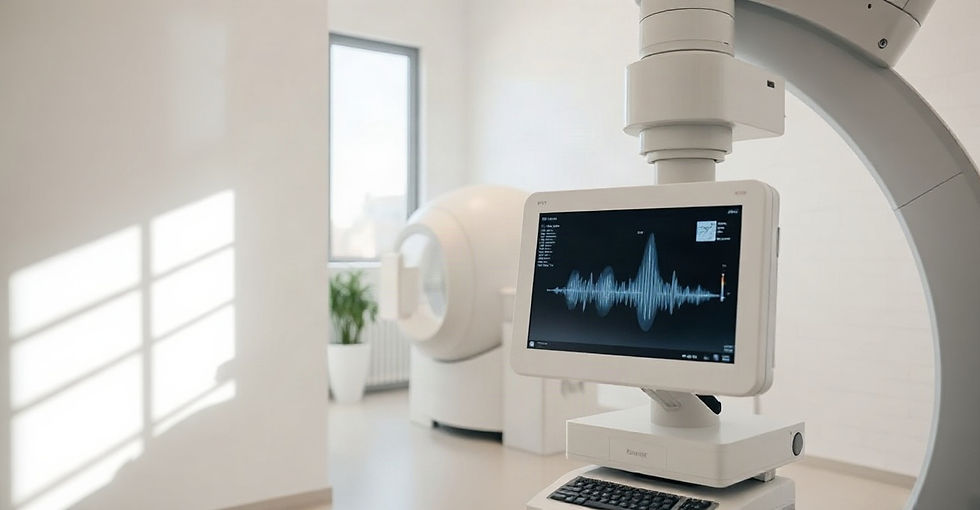
A DEXA scan (dual-energy X-ray absorptiometry) is a low-dose imaging test that measures how dense your bones are, usually at the hip and lower spine. It does not diagnose a specific disease on its own; it produces numbers that your referring doctor interprets alongside your medical history.
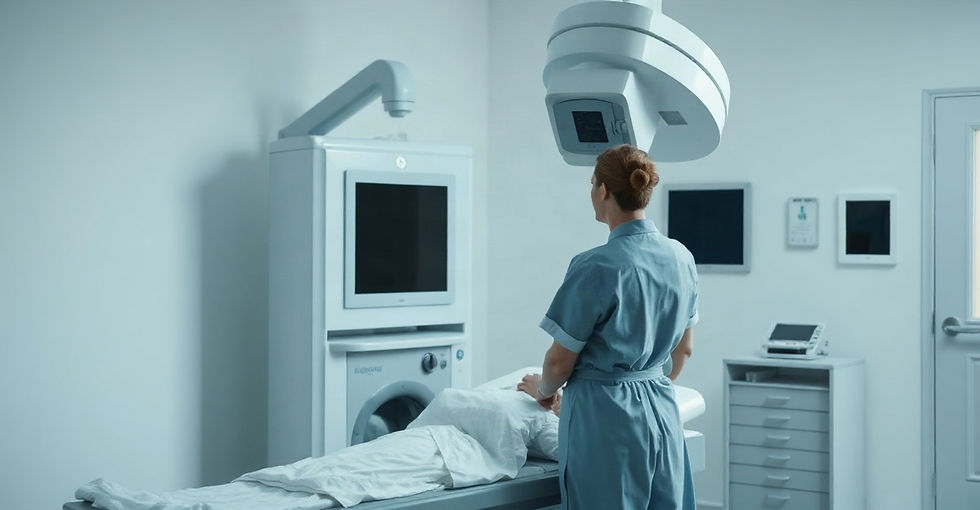
The scan is quick, typically painless, and involves far less radiation than a standard X-ray of the same area. Patients lie fully clothed on a table while a scanning arm passes overhead, usually for about ten to twenty minutes depending on the sites being imaged.
Bone density naturally declines with age, particularly after menopause in women, so the test is mainly used to catch this decline before it leads to a fracture.
Who Is Usually Advised to Get One
International guidelines such as those from the International Society for Clinical Densitometry generally recommend bone density screening for specific risk groups rather than the general population under a certain age. Your referring doctor will decide if you fall into one of these categories.
Women aged 65 and older, and men aged 70 and older, as a routine age-based screen
Postmenopausal women under 65 with additional risk factors such as low body weight or a family history of hip fracture
Adults who have broken a bone from a minor fall or bump, sometimes called a 'fragility fracture'
Anyone on long-term corticosteroid medication, which can thin bone over time
People with conditions linked to bone loss, such as rheumatoid arthritis, chronic kidney disease, or certain hormone disorders
Adults with a parent who had a hip fracture, or a personal history of early menopause or low estrogen/testosterone levels
Understanding the T-Score in Plain Words
Your DEXA report will usually include a T-score, which compares your bone density to that of a healthy young adult of the same sex. It is a statistical comparison, not a diagnosis, and the radiologist's report is only one part of the picture your doctor uses.
As a general guide used by many clinicians: a T-score of -1.0 or above is considered within the normal range, a score between -1.0 and -2.5 is often described as low bone density (sometimes called osteopenia), and a score of -2.5 or below is generally associated with osteoporosis. These are population-based cut-offs, and your own fracture risk depends on many other factors too, including age, weight, smoking status, and previous fractures.
A Z-score may also appear on the report, comparing you to others your own age rather than to a young adult. This is sometimes used for younger patients or those with an underlying condition that affects bone. Only your referring doctor can explain what your specific numbers mean for your treatment plan.
How Often the Scan Is Repeated
There is no single repeat interval that applies to everyone. Many guidelines suggest that adults with normal bone density and no major risk factors may not need another scan for several years, while those with low bone density or on treatment for osteoporosis are often rescanned roughly every one to two years to track change over time.
Because bone density changes slowly, repeating the scan too soon rarely shows a meaningful difference. Your referring doctor will set a follow-up schedule based on your initial result, any medication started, and your ongoing risk factors.
If a fracture occurs between scheduled scans, or a new risk factor develops (such as starting long-term steroid treatment), your doctor may bring the next scan forward regardless of when the last one was done.
Preparing for the Appointment
Preparation for a DEXA scan is minimal. Patients are generally asked to avoid calcium supplements for about 24 hours beforehand, wear clothing without metal zips or buttons, and remove jewellery from the area being scanned.
Your doctor may also request related blood work, such as calcium, vitamin D, or thyroid markers, to help interpret the scan result. If you're due for blood tests around the same time, this guide to fasting before a blood test explains what's typically required.
Through MelioHealth, patients in Sharjah and Dubai can be booked for a DEXA scan at a partner imaging centre once a referral has been arranged, without needing to compare centres or call around individually.
Where DEXA Fits Alongside Other Imaging
DEXA is not the only tool used to assess bone or joint health. If a fracture is suspected after a fall, your doctor may first request a plain X-ray rather than a density scan, since X-rays show the bone structure itself rather than its density.
For more detailed views of soft tissue around a joint, or when a stress fracture is suspected but not visible on X-ray, an MRI scan may be requested instead. These are different tools answering different clinical questions, and your referring doctor will select the appropriate one.
MelioHealth's role is limited to connecting patients with the correct partner imaging centre once a specific scan has been requested; centre selection and scan interpretation always sit with your doctor and the centre's radiologist.
Frequently Asked Questions
Is a DEXA scan painful?
No. It is a low-dose X-ray scan performed while lying still on a table, and it is typically painless with no injections involved.
At what age should I get my first bone density test?
Guidelines commonly point to around 65 for women and 70 for men as a routine starting age, though your doctor may advise earlier testing if you have specific risk factors.
Do I need a doctor's referral for a DEXA scan in the UAE?
Yes, DEXA scans booked through MelioHealth require a referral from your doctor, who will specify which sites need to be scanned.
How is a DEXA scan different from a regular X-ray?
A standard X-ray shows the shape and any visible fractures in a bone, while DEXA measures bone density using a much lower radiation dose, aimed at assessing fracture risk over time.
Can men get osteoporosis too?
Yes. While it is more common in postmenopausal women, men can also develop low bone density, particularly with age, low testosterone, or long-term steroid use, and may be referred for a DEXA scan accordingly.
This article is general information for patients in the UAE, not medical advice. MelioHealth is a booking and referral service; it does not provide medical advice, diagnosis, or treatment. Always follow the guidance of your referring doctor and the licensed imaging centre or laboratory performing your test. MelioHealth is not an emergency service: in an emergency call 998 for an ambulance or go to the nearest emergency department.

Comments